

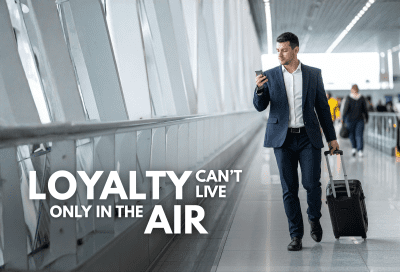
Most airline loyalty strategies are still built around travel itself. Miles earned in the air, status achieved through frequent flying, and rewards unlocked at booking or boarding.
But that model no longer reflects how travelers behave.
Business travel is less frequent for many customers. Leisure travel is more intentional. And for most travelers, there are long stretches of time between flights. When airline loyalty only shows up during bookings or trips, brands effectively disappear from customers’ lives for months at a time.
That absence weakens loyalty long before a customer ever considers switching airlines.
The Gap Between Flights Is Where Loyalty Slips
When customers aren’t actively booking travel, traditional airline loyalty programs fade into the background. Engagement drops not because travelers don’t value loyalty, but because the program no longer intersects with their daily behavior.
Most spending happens outside of travel: on groceries, dining, gas, online shopping, and everyday errands. When loyalty only rewards occasional flights, customers may remain enrolled, but the program stops influencing behavior between trips.
This is where loyalty quietly loses ground. The value becomes distant. The brand becomes passive. And by the time the next trip comes around, the program feels familiar, but not motivating.
Why Loyalty Needs to Live Between Travel Moments
Airline loyalty doesn’t fail in the air. It weakens on the ground.
To stay relevant, loyalty must extend into the long stretches between flights, reinforcing value when customers are making everyday purchasing decisions. That means connecting rewards to the spending that already happens daily, not just during travel.
When loyalty is present in everyday moments, it reinforces brand preference before a customer ever thinks about booking their next trip. Instead of waiting for travel to trigger engagement, airlines can stay top of mind continuously.
That consistency matters. Loyalty that shows up regularly shapes habits. Loyalty that only appears occasionally gets forgotten.
Complementing Miles, Not Replacing Them
This shift isn’t about abandoning traditional airline rewards. Miles, status tiers, and travel benefits still play an important role in the customer relationship.
But when loyalty delivers value only during flights, it struggles to compete for attention year-round. By extending rewards into everyday behavior, airlines give customers more frequent reasons to engage, keeping the brand active between trips rather than letting it fall dormant.
The result is loyalty that supports travel rewards instead of relying on them alone.
A More Resilient Loyalty Model for Airlines
In today’s environment, airline loyalty can’t depend solely on travel moments to stay relevant. Engagement needs to be continuous, integrated into the broader patterns of customer spending and behavior.
That’s how loyalty shifts from episodic to habitual, and how airlines maintain momentum even when customers aren’t flying.
Because when loyalty stays active between flights, it’s far more likely to influence the next one.
Find out Shopr can help you build continuous engagement that works between flights: https://shoprapp.com/contact