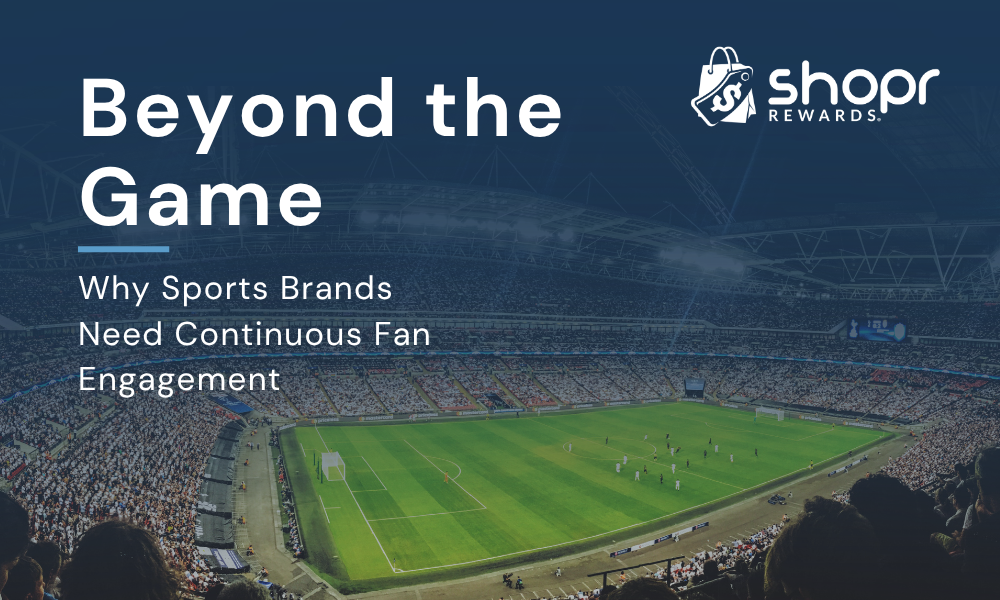
 Sports have always been built around moments.
Game day. Rivalries. Playoffs. Championships.
For decades, fan loyalty was measured by attendance, season ticket renewals, merchandise sales, and emotional connection to the team.
Those metrics still matter, but they no longer tell the full story.
Today’s fans don’t just engage during live events. They consume highlights, follow social media, participate in fantasy sports, watch short-form content, and interact with sports media every day.
As a result, loyalty is no longer defined only by what happens during a game.
It’s increasingly defined by what happens between them.
The Challenge With Traditional Sports Loyalty Models
Most sports organizations still rely heavily on event-based engagement.
Fans are activated around games, ticket sales, merchandise launches, sponsorship activations, and seasonal campaigns. These moments are powerful, but they are also limited by timing.
Games are scheduled. Seasons have breaks. Off-seasons can last months.
Between those moments, fans return to their everyday lives while countless other brands compete for their attention.
The issue isn’t that traditional sports loyalty strategies are ineffective. It’s that they are often infrequent.
And in today’s attention economy, infrequency can quickly become invisibility.
The Relevance Gap
One of the biggest challenges facing sports organizations today is maintaining relevance between key fan moments.
Games, ticket launches, merchandise drops, and special events create spikes in engagement. But those moments are temporary.
The challenge isn’t generating engagement during the season.
It’s maintaining relevance when there isn’t a game to watch, a ticket to buy, or a major event on the calendar.
The strongest sports organizations understand that loyalty isn’t sustained by moments alone.
It’s sustained by what happens between them.
Why Fan Expectations Are Changing
Modern consumers have been shaped by always-on digital experiences.
They receive personalized recommendations, earn rewards through fintech apps, receive real-time updates on social media, and expect seamless experiences across nearly every industry.
Those expectations don’t disappear when they engage with sports brands.
Fans increasingly expect value that extends beyond game day.
They want their loyalty to feel active, not passive.
At the same time, sports consumption itself has evolved. Many fans now engage through highlights, social content, podcasts, mobile experiences, and digital communities just as much as live broadcasts.
This creates more opportunities for engagement—but also raises expectations for brands to remain relevant throughout the fan journey.
The New Definition of Sports Loyalty
Historically, sports loyalty was measured through attendance, viewership, and merchandise revenue.
Those metrics remain important, but they primarily capture moments of peak engagement.
Today’s sports organizations increasingly need to understand what happens between those moments.
How often fans interact with the brand.
Whether the organization remains part of a fan’s routine.
And how consistently value is delivered throughout the year.
In this environment, loyalty becomes less about isolated events and more about ongoing relevance.
Creating Loyalty Beyond the Stadium
The most effective engagement strategies don’t require fans to change their behavior. Instead, they integrate naturally into activities fans are already doing every day.
Fans don’t need more reasons to love their team.
They need more opportunities to stay connected to it.
This shifts the loyalty model from activating fans during games to remaining relevant between them.
When that happens, loyalty becomes continuous rather than episodic.
Where Shopr Fits
Shopr Rewards helps sports organizations bridge the gap between fan moments and everyday life.
Rather than limiting rewards to ticket purchases, merchandise, or in-venue experiences, Shopr connects loyalty to the everyday spending behaviors fans already have.
Fans earn instant cash back across categories such as dining, retail, groceries, travel, entertainment, fuel, and more—creating ongoing opportunities to experience value throughout the year.
By connecting rewards to everyday spending, Shopr gives sports organizations a way to remain present long after the final whistle.
Importantly, Shopr doesn’t replace traditional sports loyalty programs.
Ticket access, memberships, exclusive content, premium experiences, and gameday benefits remain essential.
Instead, Shopr complements them by creating more frequent touchpoints between those moments.
Together, they create a more connected and continuous fan experience.
The Future of Sports Loyalty
The future of sports loyalty isn’t defined by more moments.
It’s defined by fewer gaps between them.
Sports organizations that remain relevant between games, seasons, and major events will be best positioned to strengthen fan relationships, increase engagement, and build long-term loyalty.
Because modern fan loyalty isn’t built solely in stadiums, arenas, or on game day.
It’s built in the everyday moments in between.