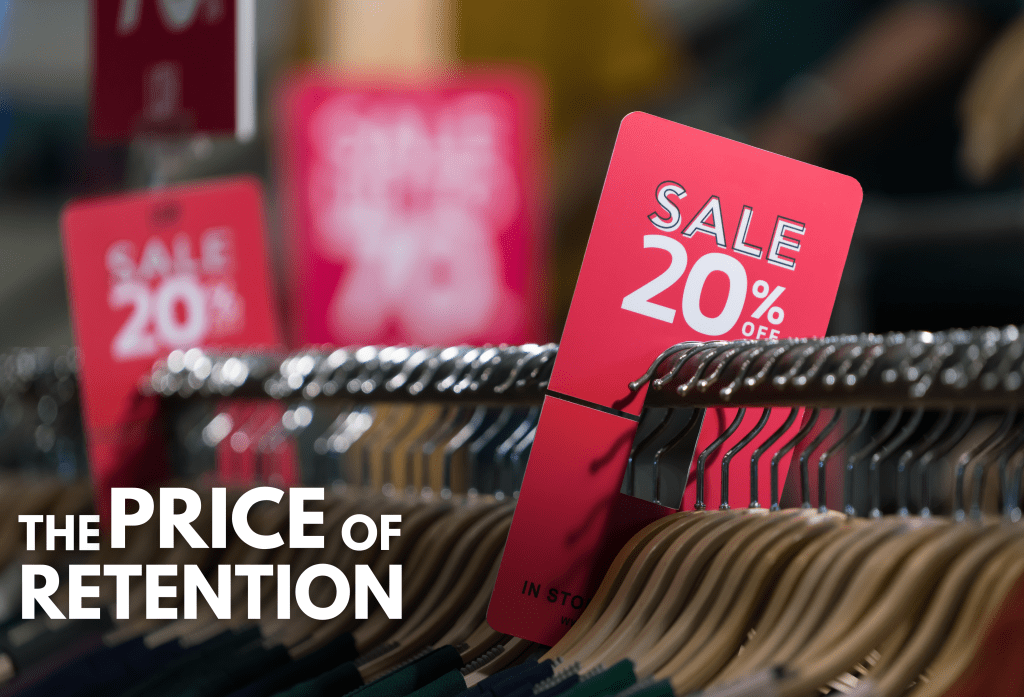
 Discounts are the default retention tool for a reason. They’re fast to deploy, easy for customers to understand, and reliably generate short-term activity. A well-timed offer can bring customers back, increase transaction frequency, and produce results that look strong in a weekly report.
But the numbers that don’t show up in that report tell a different story.
The Retention Illusion
When a discount drives a repeat purchase, it’s tempting to log that as a retention win. The customer came back. Revenue was recorded. The campaign worked.
What actually happened is more complicated.
The customer didn’t return because of the relationship. They returned because of the offer. Remove the offer, and the motivation goes with it. That’s not loyalty — it’s price sensitivity in a loyalty program’s clothing.
Over time, discount-dependent customers become harder and more expensive to retain. They’ve been trained to wait for promotions. Full-price purchases decline. Margin erodes. And the gap between revenue and profitability widens without an obvious cause.
Discounting doesn’t build loyalty. It builds an expectation of the next discount.
The Margin Trade-Off Nobody Wants to Say Out Loud
Every promotional offer carries a direct financial cost. Reduced margin on transactions that may have happened anyway. Acquisition-level spend on customers who were already retained. Budget that could have built something more durable, redirected into short-term volume.
In many cases, discounting shifts when a purchase happens — not whether it happens at all. The customer who buys at 20% off this week might have bought at full price next month. The promotion didn’t grow the relationship. It just moved the transaction forward and reduced the return on it.
At scale, this creates an unsustainable cycle. Brands maintain volume through promotions while gradually eroding the margins that fund growth.
Price Is a Weak Foundation for Loyalty
Discounts attract attention. They don’t create attachment.
Any competitor can match a promotional offer. Most will. When price is the primary reason a customer stays, the relationship is only as strong as your next deal — and one offer from a rival is enough to end it.
What actually drives long-term loyalty is perceived value: how often customers engage with a brand, how relevant it feels in their daily lives, and whether it delivers consistent benefits beyond occasional savings.
That kind of value can’t be replicated with a percentage off. It has to be built — through consistent interaction and genuine relevance.
Shifting From Price to Perceived Value
The brands breaking the discount dependency aren’t just cutting promotions. They’re replacing them with something better.
Consistent, accessible value — integrated into the customer’s everyday behavior — changes the nature of the relationship. Instead of waiting for the next offer, customers interact with the brand regularly. Each touchpoint reinforces the connection. Loyalty becomes habitual rather than transactional.
This shift doesn’t happen overnight. But it compounds. And it produces retention economics that discounting never can.
Where Shopr Fits
Shopr Rewards gives brands an alternative to discount-driven retention — one that delivers value without eroding margin.
Customers earn instant cash back on everyday purchases across a wide network of national brands. These are purchases they were already going to make. The reward feels like added value, not a price reduction — because it is.
That cash back can be kept open across the Shopr ecosystem, or locked back into the client brand for future spend — on services, products, appointments, subscriptions, or anything else in the brand’s revenue footprint.
The result is a rewards engine funded by merchant partnerships, not by brand margin. Customers stay engaged between purchases. The relationship deepens. And the next decision they make — to return, renew, or refer — doesn’t depend on what discount you’re running that week.
The best retention strategy isn’t cheaper — it’s more consistent. Shopr makes consistency the default.