 For years, technology has made it easier to spend money.
One-click checkout, saved payment information, digital wallets, personalized product feeds, and same-day delivery have removed friction from purchasing. Consumers can discover something they want and buy it within seconds.
Artificial intelligence could introduce a different possibility.
What if the same technology that makes purchasing easier could also help people make more informed decisions about when, where, and how they spend?
AI-powered recommendations, predictive budgeting, price comparison, and automatic rewards are creating a new kind of shopping experience—one where technology does more than encourage the next purchase. It helps consumers get more value from purchases they already intend to make.
AI Is Becoming Part of the Shopping Journey
AI-assisted shopping is no longer a distant concept.
In 2026, NielsenIQ reported that 42% of consumers had used at least one AI tool while shopping within the previous month. Consumers were using AI for product recommendations, shopping assistants, voice purchasing, subscriptions, and other parts of the purchase journey.
Today, many recommendation engines are designed to predict what someone is most likely to buy next. Future systems could focus just as heavily on helping consumers determine the smartest way to complete a purchase they were already considering.
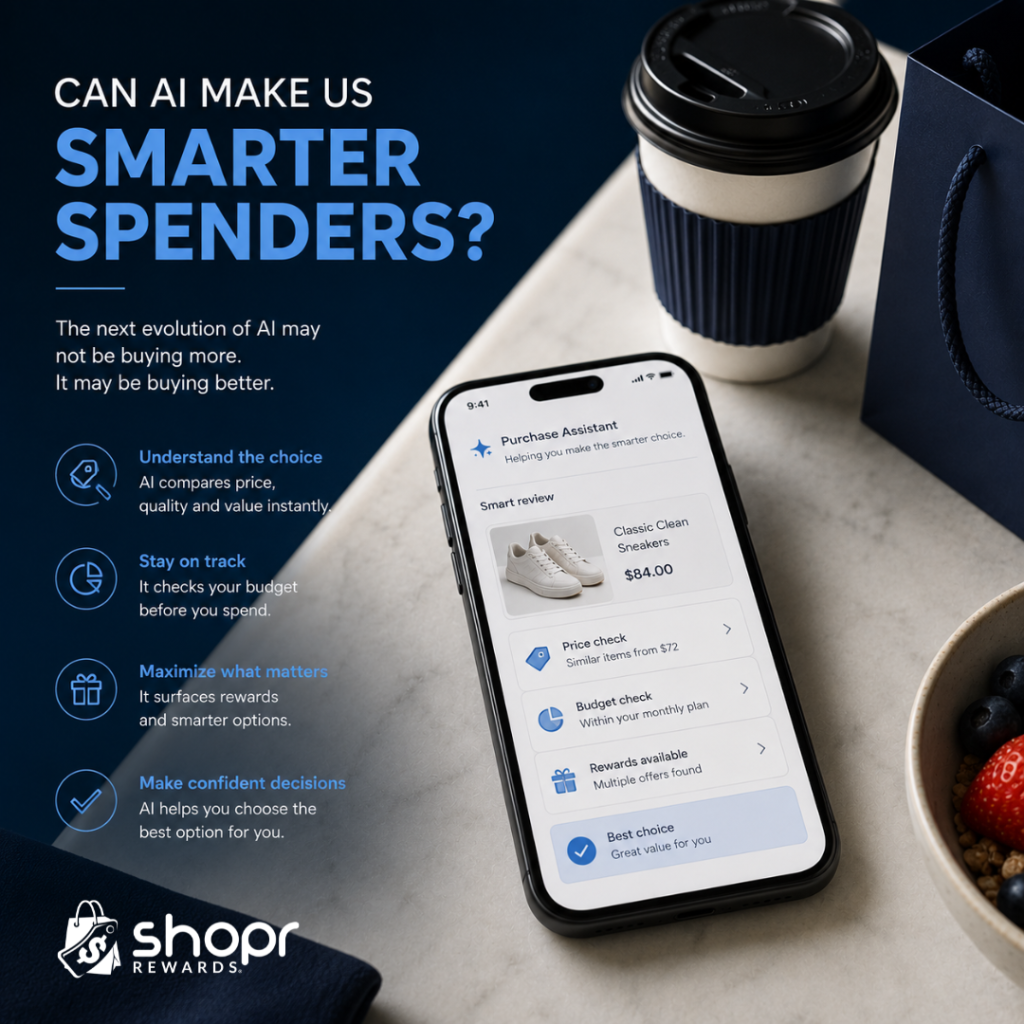
Imagine planning to buy a new pair of running shoes. An AI assistant could compare retailers, surface promotions, identify cash-back opportunities, account for delivery costs, and flag whether another option offers better overall value.
The purchase still happens. The intelligence surrounding it improves.
Predictive Budgeting Could Add Context Before Checkout
Traditional budgeting is often retrospective.
Consumers review transactions after they happen and adjust future spending based on what they discover. AI could make that process more predictive.
By recognizing recurring expenses, purchasing patterns, upcoming bills, and typical spending levels, financial tools could provide context before a decision is made.
A traveler booking a hotel could see how the expense fits alongside upcoming obligations. A shopper considering a larger purchase could understand its potential impact on the rest of the month.
The goal would not be to dictate spending, but to make useful information available when it can influence a decision.
Rewards Could Become Almost Automatic
Rewards can create meaningful value, but they can also require effort.
Consumers may need to activate an offer, open an app, compare benefits, or track rewards that expire. AI combined with transaction technology could reduce that work by surfacing relevant opportunities automatically.
Planning to order dinner? A platform could identify an available cash-back opportunity. Booking a trip? It could highlight an applicable travel benefit. Shopping with a familiar retailer? Technology could show the best available reward before checkout.
For consumers, the experience becomes simpler. For organizations, the challenge shifts from merely offering benefits to making those benefits easy to discover and use.
Personalization Could Become More Useful, Not Just More Precise
Personalization has historically been designed around increasing conversion.
You purchased this, so you may want that. You viewed a product, so an advertisement follows you across the internet.
AI creates room for a more useful form of relevance.
Instead of simply improving targeting, intelligent systems could become better at matching people with benefits that fit their actual habits and priorities.
A frequent traveler might see travel-related savings first. A commuter could be shown offers tied to everyday transportation or dining. A shopper who consistently favors certain categories could receive benefits that reflect those preferences instead of generic promotions.
The value is not just that the recommendation is more accurate.
It is that the experience feels more relevant.
For organizations, this could make personalization less about sending more messages and more about showing fewer, better ones.
Consumers Still Want Control
Smarter technology does not automatically mean smarter spending.
The same AI that can locate a better price can also become extremely effective at encouraging an unnecessary purchase.
A May 2026 Gartner survey found that just 11% of U.S. consumers were willing to let AI make purchase decisions for them, even in relatively low-stakes categories. Consumers showed greater interest in tools that help compare prices, identify deals, and narrow choices while leaving the final decision in human hands.
That suggests the near-term opportunity may be assistance rather than autonomy.
Businesses will also need to be clear about whose interests a recommendation serves. If an AI assistant suggests a product or merchant, consumers may want to know why.
Trust will become part of the product.
The Future of Shopping May Be About Better Spending
For decades, commerce technology has focused on removing obstacles between interest and purchase.
AI could begin removing a different kind of friction: the effort required to make that purchase financially smarter.
Price comparisons can become faster. Budgets can become more predictive. Relevant rewards can appear at the right moment. Purchasing decisions can carry more context.
Instead of encouraging consumers to stop spending, AI could help them become more intentional about spending already built into their lives.
For businesses, that creates an equally important opportunity. Platforms that help consumers save money, discover meaningful benefits, and make better-informed decisions may earn something increasingly difficult to capture: continued engagement and trust.
The next evolution of commerce may not be defined by technology convincing people to buy more.
It may be defined by technology helping every purchase work harder.