 For decades, financial institutions have relied on relatively standardized information to understand consumers.
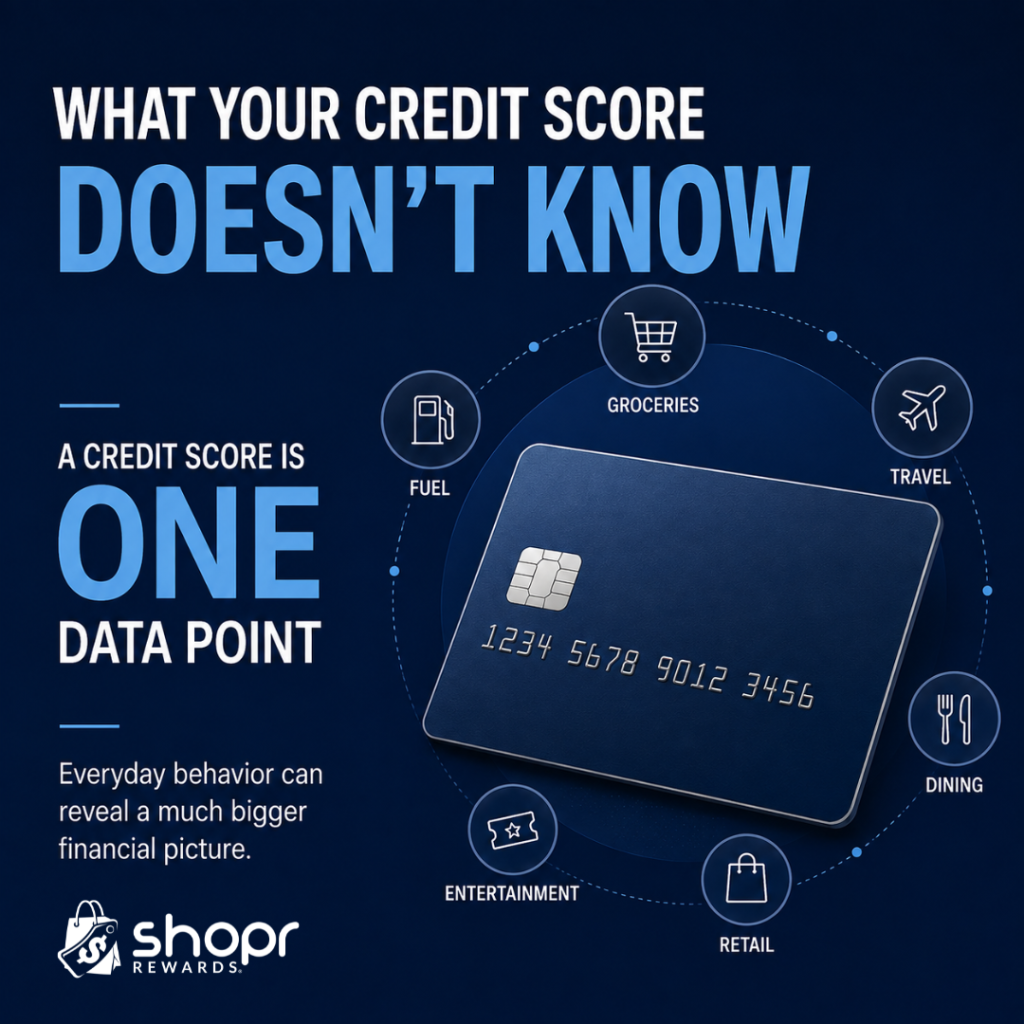
Credit scores, income, account balances, payment histories, and demographic information can provide an important picture of financial health and risk.
But they do not tell the entire story.
Everyday financial behavior can reveal something different: where people consistently spend, which benefits they actually use, what categories matter to them, and how their priorities change over time.
As financial technology becomes more sophisticated, responsibly used transaction data could help businesses move beyond broad assumptions and create financial experiences that feel far more relevant to the individual.
The opportunity is significant. So is the responsibility that comes with it.
Everyday Spending Tells a Different Story
Consider two consumers with similar financial profiles.
On paper, they might look nearly identical. Their day-to-day priorities, however, could be completely different.
One may spend heavily on travel and dining. Another may prioritize groceries, fuel, and family entertainment. Someone else might consistently shop with a small group of retailers or shift spending throughout the year based on changing needs.
A traditional financial profile may not capture those differences.
Transaction data can.
When consumers give appropriate permission and information is handled responsibly, patterns in everyday spending can help organizations better understand which experiences and benefits are likely to be useful.
That creates the possibility of moving from broad segmentation toward something much closer to individual relevance.
Rewards Could Reflect Real Life
Traditional rewards programs frequently organize consumers into large groups.
Everyone receives the same promotion. Members earn according to the same structure. Benefits are selected because they appeal to the average customer.
The problem is that the average customer rarely exists.
Someone who rarely travels may place little value on a travel-focused promotion. A frequent traveler might consider it extremely valuable. The same principle applies to dining, entertainment, retail, transportation, and countless other spending categories.
Transaction intelligence could help make those differences easier to recognize.
Rather than simply offering more rewards, organizations could prioritize the benefits most aligned with how an individual actually lives.
For consumers, that could mean fewer irrelevant offers and more opportunities to save on purchases already part of their routines.
For businesses, relevance may be considerably more valuable than volume.
Personalization Could Extend Beyond Rewards
The potential extends beyond loyalty programs.
Understanding patterns in financial behavior could eventually help digital platforms provide more timely and useful financial experiences.
A consumer whose recurring expenses are increasing might benefit from different savings tools than someone preparing for a major discretionary purchase. A frequent traveler may value features related to travel planning or foreign transactions, while another person may care more about everyday savings.
The point is not to predict every decision a person will make.
It is to recognize that financial needs are rarely identical.
That could shift personalization away from simply deciding which advertisement or promotion someone should see next. Instead, financial experiences themselves could become more responsive to individual circumstances.
Relevance Requires Restraint
There is, however, an important line between helpful and intrusive.
A perfectly timed benefit can feel convenient. A recommendation that reveals just how much a company knows about someone’s behavior can create the opposite reaction.
That makes responsible data use central to the future of personalization.
According to Cisco’s 2025 Consumer Privacy Survey, 64% of consumers said they worry that sharing data with AI could expose their personal or financial information publicly, illustrating the broader sensitivity surrounding how personal information is used as digital experiences become more intelligent.
Consumers increasingly expect businesses to provide personalization while also protecting the information that makes personalization possible.
Those expectations are not contradictory.
The strongest experiences will likely be those where people understand what information is being used, why it improves their experience, and what control they retain over it.
Trust Could Become Part of the Value Exchange
Businesses often think about consumer data as something customers provide.
A more sustainable approach may be to view it as an exchange.
If a consumer allows an organization to use certain information, what do they receive in return?
Maybe it is a more relevant cash-back opportunity. Perhaps it is a personalized savings experience, fewer irrelevant promotions, or an easier way to identify financial benefits.
When the value is obvious, personalization can feel useful rather than extractive.
Transparency becomes especially important as transaction intelligence grows more powerful. Organizations that collect information simply because they can risk weakening the relationship they are trying to improve.
Those that demonstrate a clear consumer benefit have an opportunity to build something more durable.
A More Personal Financial Future
Credit scores and traditional financial indicators are not disappearing. They continue to serve important purposes.
But the future of financial experiences may be shaped by a much broader understanding of consumers.
Everyday spending can provide context that traditional profiles cannot: what people value, which benefits fit naturally into their routines, and where meaningful savings opportunities may exist.
Used responsibly, that intelligence could help organizations replace generic financial experiences with ones that are more relevant, timely, and useful.
The key will be remembering that better data does not automatically create a better experience.
What matters is what businesses choose to do with it.
The organizations that succeed may not be those that know the most about their customers.
They may be the ones that use what they know to deliver the most value—while giving consumers every reason to trust them.